
Running a research conference is a project with fixed deadlines, hundreds of moving parts, and a community that expects things to go right. Whether you are organizing a 100-person workshop or a 2,000-delegate international symposium, the quality of your research conference management decides whether authors submit, reviewers deliver, and attendees come back next year.
This guide walks organizing committees through the full lifecycle: planning, call for papers, peer review, registration, on-site delivery, and post-event follow-up.
What Is Research Conference Management?
Research conference management is the end-to-end process of planning, running, and closing out an academic or scientific conference. It covers governance, budgeting, paper submission and review, scheduling, registration, communications, venue and logistics, and publication of proceedings.
1. Build the Organizing Committee and Define Roles
A clear structure prevents duplicated work and missed deadlines. Most conferences need:
- General Chair: overall accountability, sponsor and society relations.
- Program Chair(s): call for papers, reviewer assignment, final program.
- Finance Chair: budget, fees, sponsorship, reimbursements.
- Local Arrangements Chair: venue, catering, accommodation, visas.
- Publicity Chair: website, mailing lists, social media, partner outreach.
- Publication Chair: camera-ready papers, proceedings, indexing.
Write down who decides what. Ambiguity over who approves an acceptance, a refund, or a keynote invitation causes the most avoidable delays.
2. Set Goals, Scope, and Budget
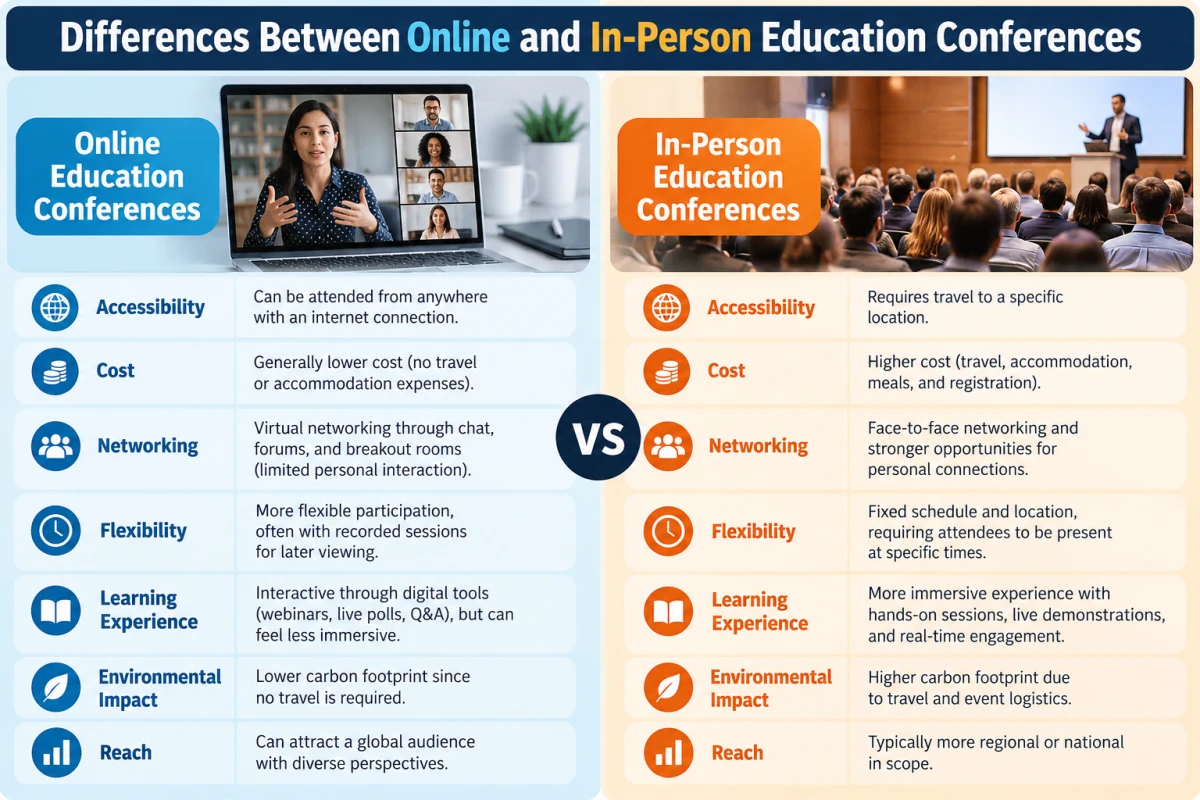
Start with the questions that shape everything else: Who is the audience? How many attendees and submissions do you expect? Is the format in-person, virtual, or hybrid? What does success look like: citations, networking, revenue, or community growth?
Then build a budget with realistic lines for venue, catering, AV, platform fees, printing, student grants, keynote travel, insurance, and a 10 to 15 percent contingency. Set registration fee tiers (early bird, regular, student, member) from expected costs, not guesswork.
3. Create a Timeline Working Backwards from the Event
Work backwards from the conference dates. A typical schedule looks like this:
- 12 to 9 months out: committee formed, venue and dates confirmed, website live.
- 9 to 7 months out: call for papers (CFP) published and promoted.
- 5 months out: submission deadline.
- 5 to 3 months out: peer review and discussion.
- 3 months out: acceptance notifications, early bird registration opens.
- 2 months out: camera-ready deadline, program drafted.
- 1 month out: final program, speaker briefings, logistics checks.
4. Write and Promote a Strong Call for Papers
A good CFP is specific. Include topics of interest, submission types (full paper, short paper, poster, abstract), formatting rules, review model (single-blind, double-blind), important dates, publication outlet, and contact details. Promote it through academic mailing lists, society newsletters, social media, university departments, and conference listing platforms such as ScholarMeet so that researchers in your field can discover it.
5. Run a Fair and Efficient Peer Review
Review quality is your conference's reputation. To keep it high:
- Recruit a diverse program committee and assign at least three reviewers per paper.
- Match papers to reviewers by expertise and declare conflicts of interest up front.
- Give reviewers a clear rubric: originality, technical soundness, clarity, relevance.
- Cap each reviewer's load, ideally at five to eight papers.
- Set an internal review deadline well before the notification date to leave time for discussion and meta-reviews.
- Use double-blind review where your community expects it, and enforce it.
Send decisions on time and include reviewer comments. Authors remember how they were treated, even when the paper was rejected.
6. Manage Registration and Payments
Make registration simple: one form, clear fee categories, multiple payment options, instant confirmation, and invoices or receipts for institutions. Support multiple currencies if you expect international delegates. Plan your policies in advance: refunds, substitutions, presenter-registration requirements, and visa invitation letters.
7. Design the Program and Choose the Venue
Group accepted papers into coherent sessions, avoid scheduling parallel tracks that split the same audience, and leave generous breaks. Networking happens between sessions, not during them. When choosing a venue, check capacity, room layout, Wi-Fi, accessibility, proximity to hotels and transport, and AV support. For hybrid events, confirm streaming quality and plan how remote attendees will ask questions and join discussions.
8. Communicate Consistently
Keep one authoritative source of information, usually your conference website, and send email updates at fixed milestones: CFP, deadline reminders, notifications, registration open, final logistics. Prepare a speaker and chair briefing pack covering session timing, slide format, and AV details.
9. Secure Sponsorship
Offer tiered packages with real value: logo placement, booth space, a talk slot, access to a recruiting session, or a sponsored student award. Approach sponsors early with attendee numbers, audience profile, and past-event outcomes. Deliver what you promise and send a short report afterward to make renewals easy.
10. Deliver the Event Smoothly
- Run a technical rehearsal the day before.
- Assign trained volunteers to registration, session rooms, and information desks.
- Keep a printed run sheet with phone numbers for every key person.
- Enforce session timing. Strong chairs are the best investment you can make.
- Publish a code of conduct and name a person attendees can contact.
11. Close Out: Proceedings, Feedback, and Handover
After the event, collect final papers, publish proceedings, and apply for indexing where relevant. Send a feedback survey within a week, share photos and highlights, thank volunteers and sponsors, and reconcile the budget. Most importantly, write a handover document: what worked, what failed, vendor contacts, and templates. The next organizing committee will thank you.
Common Mistakes to Avoid
- Starting promotion too late and compressing the submission window.
- Overloading reviewers, which leads to shallow reviews and late decisions.
- Underestimating visa timelines for international speakers.
- Having no contingency in the budget or no backup for key speakers.
- Managing everything in scattered spreadsheets and inboxes.
Use the Right Tools
Spreadsheets and email threads stop working once you pass a few dozen papers or attendees. A dedicated platform for submissions, review, registration, and communication reduces errors and gives the committee a single view of progress. Platforms like ScholarMeet help organizers list their conference, reach the right researchers, and manage attendee registrations and paper submissions in one place.
Final Checklist for Organizing Committees
- Roles, budget, and timeline approved
- CFP published and promoted
- Review process and rubric defined
- Registration and payment flow tested
- Venue, AV, and accessibility confirmed
- Sponsors secured and deliverables tracked
- Volunteer and chair briefings completed
- Post-event proceedings, survey, and handover planned
Frequently Asked Questions
How far in advance should we start planning a research conference?
Start 12 to 18 months ahead for a large international conference, and at least 6 to 9 months ahead for a smaller workshop or symposium.
How many reviewers should each paper have?
Three is the common standard. It gives enough perspectives to reach a decision and a tie-breaker when opinions differ.
Should we choose single-blind or double-blind review?
Follow the norm in your field. Double-blind reduces bias related to author identity and affiliation, and is increasingly the preferred option.
How do we price registration fees?
Divide expected total costs by expected paying attendees, add a contingency, then create early bird, student, and member tiers around that baseline.