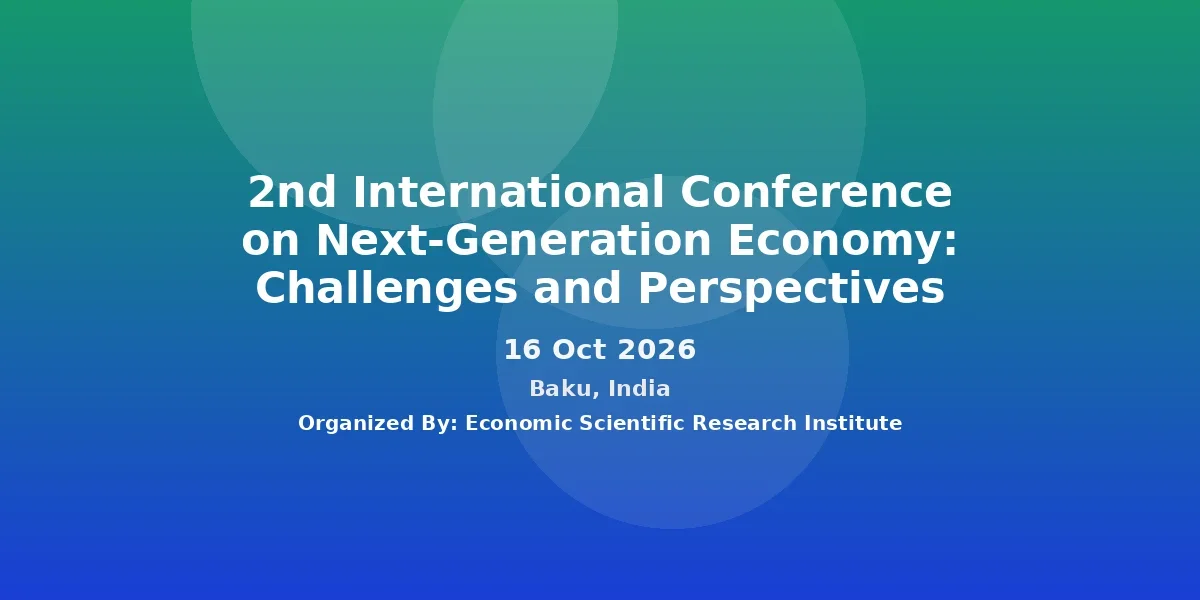
The Economic Scientific Research Institute (ESRI) was established by Decree No. 1382 of the President of the Republic of Azerbaijan dated June 26, 2021, on the basis of the Scientific Research Institute of Economic Reforms. With a significant history spanning 60 years, the research institution is the successor to the Scientific Research Institute of Economics established in 1964 under the State Planning Committee of the Azerbaijan SSR.
The Institute is a leading research organization operating under the Ministry of Economy. The main objective of its activities is to ensure that decisions related to the development of the national economy are based on scientific foundations and to support the formulation of economic policy through scientific research.
The Institute’s main mission is to develop as a modern think tank and scientific research institution by conducting scientific research and analyses related to the overall and sectoral development of the national economy, organizing academic training programs, developing the scientific foundations of economic development policy, preparing and publishing analytical and informational products, as well as designing and implementing relevant programs and projects.
Among the Institute’s strategic goals, key priorities include gaining recognition as a modern think tank at both national and international levels, strengthening its scientific and analytical capacity, and increasing its influence in the economic decision-making process. In this regard, the Institute is currently actively working on promoting its brand, shaping its corporate and professional image, developing electronic information resources, and expanding its network of potential partners for cooperation.
Institute's areas of activity:
development of the scientific foundations of socio-economic development policy;
conducting research on the socio-economic development of regions;
preparation and evaluation of economic and social programs;
cooperation with local and international organizations, universities, and research centers;
training of personnel at the doctoral level in various fields of the economy;
preparation and publication of analytical and informational products and scientific publications;
organization of trainings in line with the Institute’s areas of activity, development of educational programs, etc.