
Conference Management Software vs. Traditional Conference Websites: Which Is Better for Organizers?
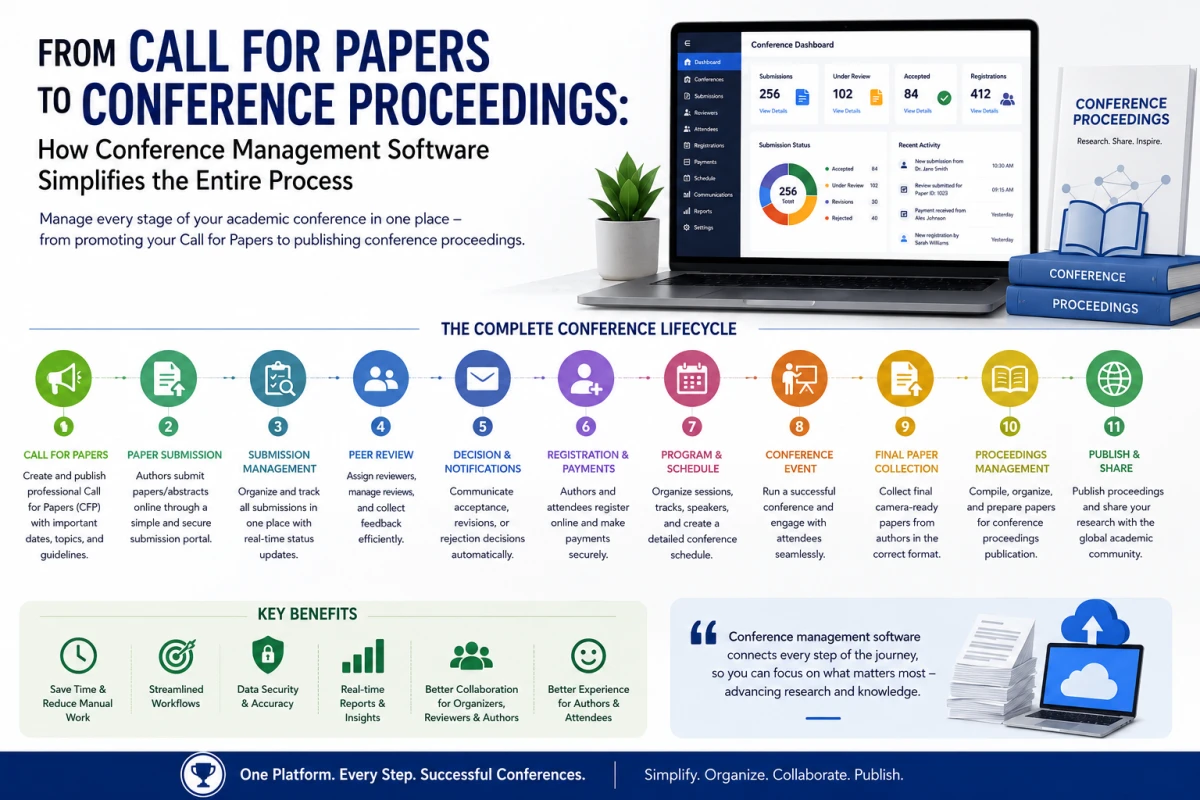
Organizing a conference involves much more than creating a website. Organizers need to manage registrations, attendees, paper submissions, payments, communication, schedules, and other important conference activities.
This is where conference management software can provide significant advantages over a traditional conference website. In this guide, we compare both approaches and explain which option is better for universities, research societies, and conference organizers.
What Is Conference Management Software?
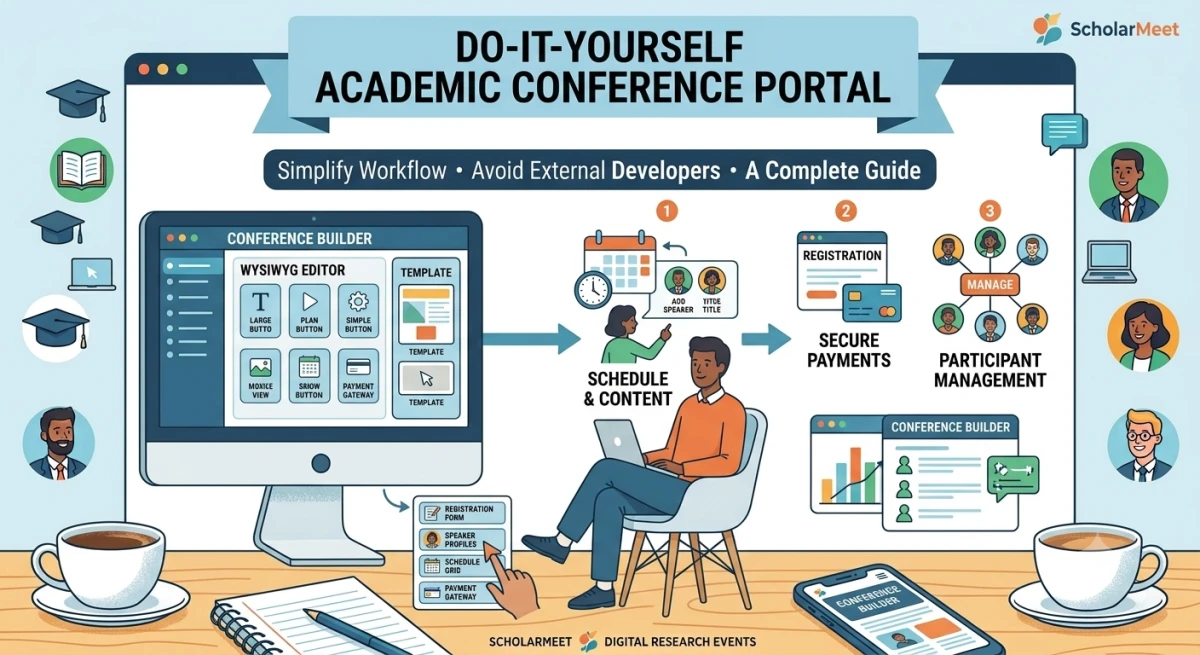
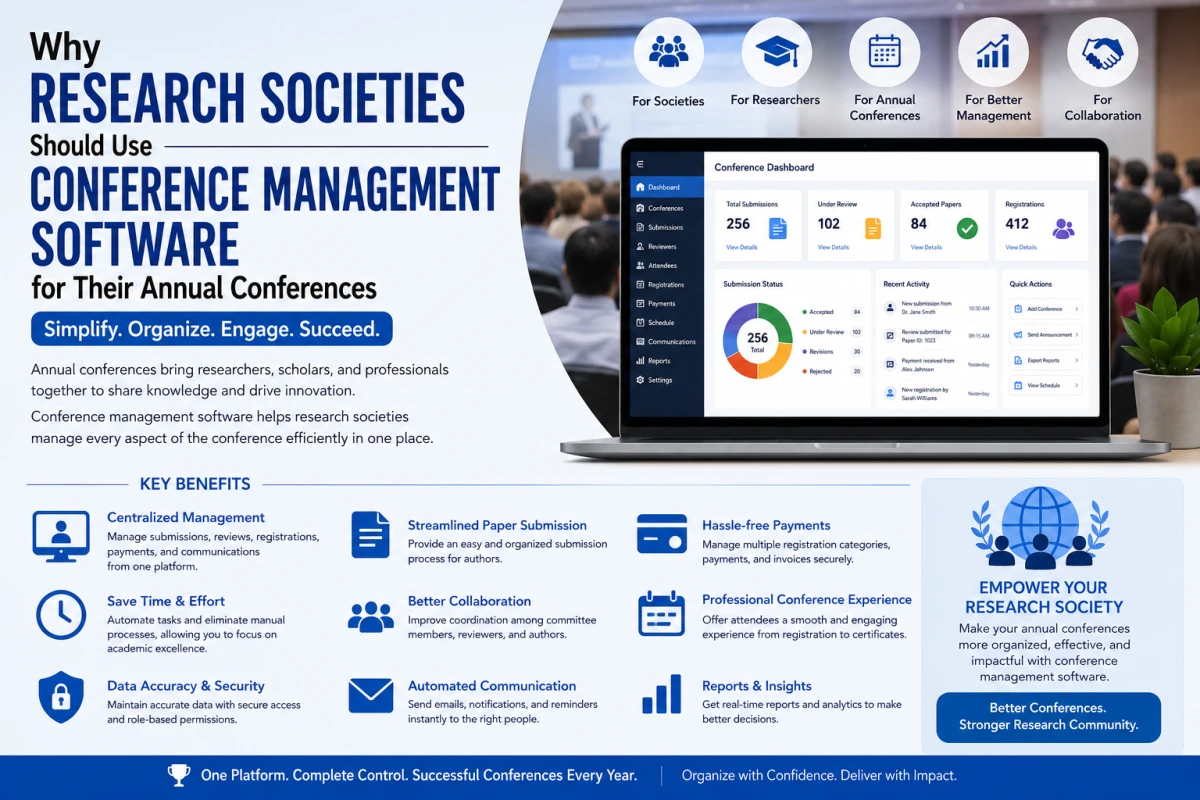
Conference management software is a specialized platform designed to manage different stages of an academic or professional conference. It can combine conference registration, paper submission, attendee management, payments, communication, and event information in one system.
What Is a Traditional Conference Website?
A traditional conference website is primarily used to provide information about an event. It may include details such as the conference title, dates, venue, speakers, important deadlines, contact information, and registration instructions.
However, many traditional websites require organizers to use separate tools for registrations, payments, paper submissions, email communication, and attendee management.
Conference Management Software vs. Traditional Conference Websites
| Feature | Conference Management Software | Traditional Conference Website |
|---|---|---|
| Conference Information | Yes | Yes |
| Online Registration | Built-in | Usually requires additional tools |
| Paper Submission | Built-in or integrated | Usually separate |
| Attendee Management | Centralized | Often manual |
| Payment Management | Can be integrated | Usually requires external payment solutions |
| Email Communication | Can be automated | Usually handled separately |
| Conference Analytics | Advanced reporting | Limited |
Why Organizers Choose Conference Management Software
1. Centralized Conference Management
Organizers can manage registrations, attendees, submissions, payments, and conference information from a centralized platform instead of maintaining multiple systems.
2. Easier Registration Management
Online registration can be managed through a structured workflow, making it easier to track participants and registration status.
3. Paper and Abstract Management
Academic conferences often require authors to submit papers or abstracts. A conference management system can simplify submission and review workflows.
4. Better Attendee Management
Organizers can maintain attendee information and manage registrations more efficiently than relying on spreadsheets and separate tools.
5. Automation
Automated emails, registration confirmations, reminders, and notifications can reduce repetitive administrative work.
When Is a Traditional Conference Website Enough?
A traditional website may be sufficient for a small event that only requires basic information such as the conference date, venue, agenda, speakers, and contact details.
However, as the number of attendees, submissions, payments, and administrative tasks increases, a dedicated conference management platform can become much more useful.
Which Is Better for Conference Organizers?
For universities, research institutions, professional associations, and organizations managing recurring or complex conferences, conference management software is generally the more scalable option. It can reduce manual work and bring multiple conference processes into a single platform.
Conclusion
Traditional conference websites are useful for presenting event information, but conference management software goes much further. It can help organizers manage registrations, attendees, submissions, payments, communication, and other conference operations more efficiently.
For organizers looking to simplify conference operations and provide a better experience for authors and attendees, a dedicated conference management platform can be a more effective solution.