
How to Organize a Professional Conference Without Hiring a Separate Website Development Team
Organizing a professional conference requires careful planning, effective communication, participant management, and reliable technology. For universities, research societies, academic institutions, and professional organizations, a conference website is often considered an essential part of the event.
However, creating and maintaining a conference website does not always require hiring a separate website development team. Modern conference management software can provide many of the tools organizers need to create and manage a professional online conference presence.
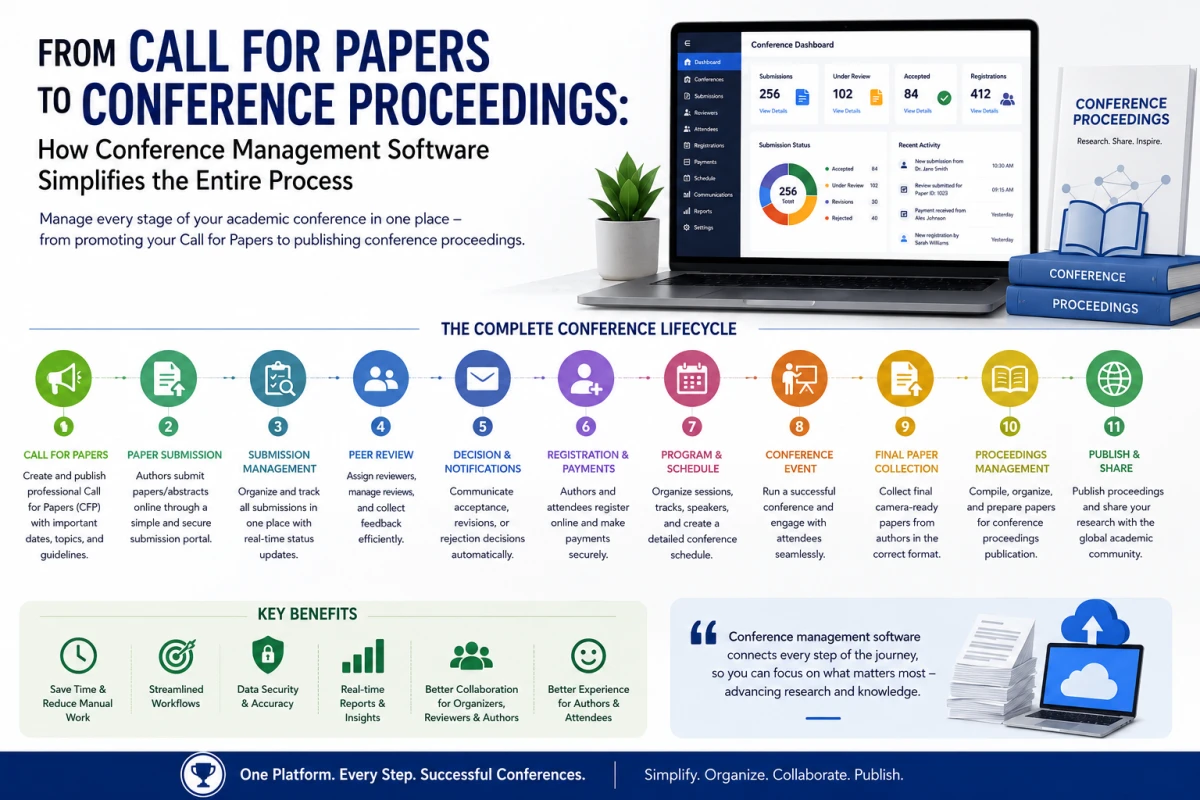
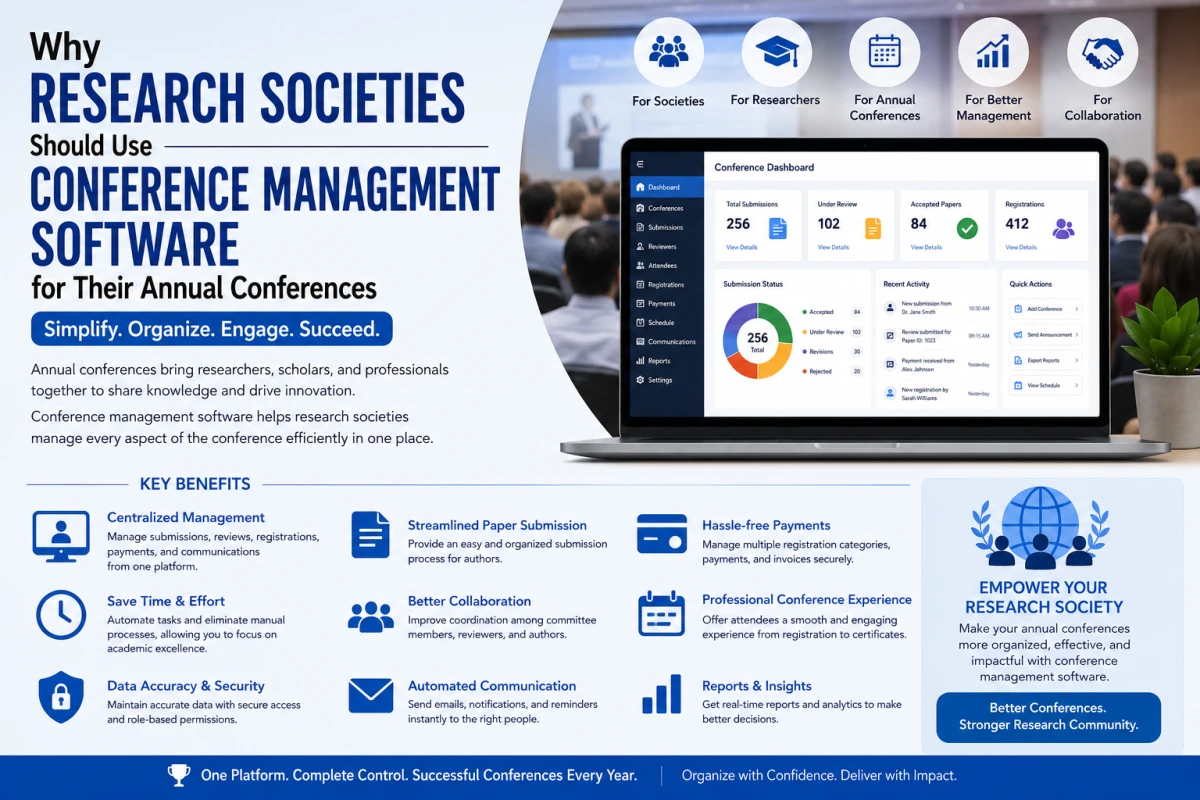
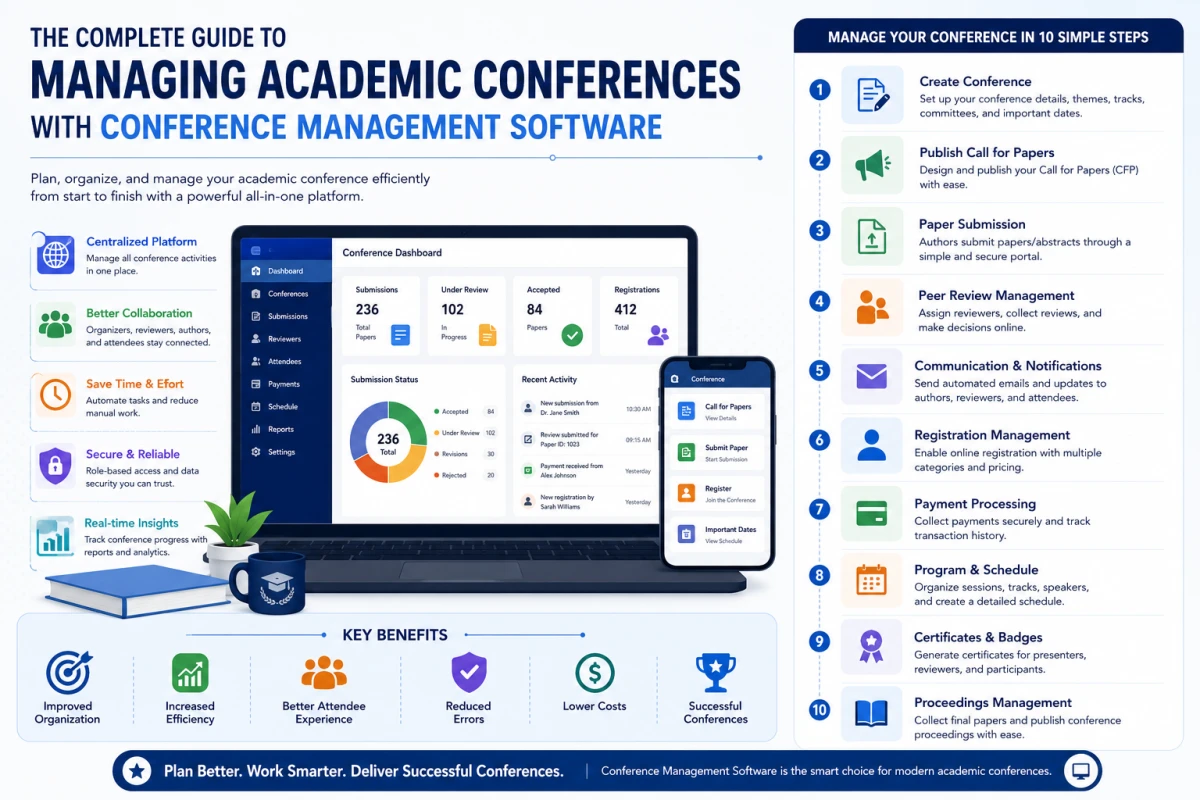
From conference registration and paper submission to payments, attendee management, and communication, organizers can manage many important activities through a single platform.
Why Do Conferences Need a Website?
A conference website acts as the central information point for participants. It typically provides information about the conference, important dates, registration details, submission guidelines, speakers, venue information, schedules, and contact details.
Traditionally, organizations may hire a web development agency or an internal development team to build a dedicated conference website. While this approach can work, it can also increase development costs, maintenance requirements, and the time required to launch the conference website.
Can You Organize a Conference Without a Separate Development Team?
Yes. A dedicated conference management system can provide many of the capabilities required to organize a professional conference online without requiring organizers to build everything from scratch.
Instead of developing registration forms, submission systems, payment workflows, and participant dashboards separately, organizers can use ready-made conference management features.
1. Use Conference Management Software
The simplest way to reduce the need for a separate website development team is to use conference management software designed specifically for academic and professional events.
A suitable platform can provide a conference page along with tools for registration, submissions, payments, communication, and participant management.
This allows organizers to focus on conference planning instead of spending time building basic technical functionality.
2. Create a Professional Conference Page
A professional conference page should clearly communicate the purpose and important details of the event.
It should typically include:
- Conference title and description
- Conference dates
- Venue or online event information
- Important deadlines
- Registration information
- Paper and abstract submission guidelines
- Conference committee details
- Keynote speakers
- Conference schedule
- Contact information
With conference management software, organizers can often manage this information without writing website code.
3. Simplify Online Conference Registration
Registration is one of the most important functions of a conference website. Instead of creating a registration form from scratch, organizers can use built-in conference registration software.
Participants can enter their information, select an appropriate registration category, and complete the registration process online.
Organizers can then monitor registrations through a centralized dashboard.
4. Manage Paper and Abstract Submissions
Academic and professional conferences often require authors to submit research papers, abstracts, posters, or other documents.
Developing a custom submission system can require significant technical effort. A conference management platform can provide an existing submission workflow where authors can upload their documents and provide the required information.
Organizers can manage submissions from a central dashboard instead of handling hundreds of email attachments.
5. Manage the Review Process
If the conference uses peer review, organizers also need a reliable way to coordinate reviewers and track decisions.
Conference management software can help organizers assign submissions to reviewers, monitor review progress, and manage acceptance or rejection decisions.
This eliminates the need to build a separate review management system.
6. Handle Online Payments
Professional conferences may have multiple registration categories and pricing options. Managing payments manually can become complicated as registrations increase.
A conference management system can connect registration information with payment information, helping organizers maintain better records of participants and transactions.
7. Automate Participant Communication
Conference organizers need to communicate with participants throughout the event lifecycle. Typical communications include registration confirmations, submission updates, acceptance notifications, payment confirmations, reminders, and schedule announcements.
Using a centralized conference platform can make these communications easier to organize and automate.
8. Manage Conference Information Without Coding
One of the biggest advantages of using conference management software is that organizers do not necessarily need programming knowledge to update important conference information.
Instead of submitting every content change to a developer, authorized conference organizers can manage information through an administrative dashboard, depending on the capabilities of the selected platform.
9. Reduce Conference Technology Costs
Building a custom conference website can involve several costs, including development, hosting, maintenance, updates, security, payment integration, and ongoing technical support.
A conference management platform can combine many of these requirements into one solution. This can make technology budgeting more predictable for universities, research societies, and professional organizations.
10. Launch Your Conference Faster
A custom website development project can take time, especially when registration, submission, payment, user accounts, and administrative features need to be developed.
With ready-to-use conference management software, many of these features are already available. Organizers can therefore spend more time preparing the academic and operational aspects of the event rather than waiting for technical development.
Conference Website Development vs. Conference Management Software
| Requirement | Custom Website Development | Conference Management Software |
|---|---|---|
| Conference Website | Needs to be developed | Usually available as part of the platform |
| Registration | Requires development or integration | Built-in registration tools |
| Paper Submission | Requires custom development | Dedicated submission workflow |
| Payments | Requires payment integration | Can be integrated into the registration workflow |
| Participant Management | Requires database and admin functionality | Centralized participant management |
| Maintenance | Organization manages development resources | Platform provider typically manages the software |
What Should You Look for in Conference Management Software?
Not every conference management platform provides the same features. Before choosing a solution, organizers should evaluate whether it supports their specific conference requirements.
- Professional conference pages
- Online registration
- Paper and abstract submission
- Reviewer management
- Attendee management
- Payment processing
- Email notifications
- Speaker and author management
- Conference schedule management
- Certificates
- Reports and analytics
- Mobile-friendly design
- Security and data protection
- Technical support
Who Can Benefit From Conference Management Software?
Conference management software can be useful for organizations that regularly organize academic, research, scientific, professional, or industry conferences.
It can be particularly useful for:
- Universities and colleges
- Research societies
- Academic associations
- Professional organizations
- Research institutes
- Conference organizers
- Event management teams
Conclusion
Organizing a professional conference does not necessarily mean hiring a separate website development team. With modern conference management software, organizers can access ready-made tools for conference pages, registration, paper submission, reviews, payments, participant management, and communication.
The right platform can reduce development dependency, lower administrative effort, speed up conference setup, and provide participants with a more organized online experience.
For universities, research societies, and professional organizations that organize conferences regularly, using a dedicated conference management system can be a practical alternative to developing and maintaining a custom conference website from scratch.