
How to Organize a Research Conference Online: A Complete Guide for Universities and Research Societies
Organizing a research conference online can help universities, research institutes, academic departments, and research societies connect researchers from different locations. However, a successful online conference requires careful planning, clear responsibilities, reliable technology, and an organized submission and registration process.
From choosing the conference theme to collecting research papers, managing peer review, inviting speakers, organizing online sessions, and collecting feedback, every stage should be planned in advance.
What Is an Online Research Conference?
An online research conference is an academic event where researchers, academics, students, professionals, and experts participate remotely through internet-based communication platforms.
An online conference can include keynote presentations, research paper presentations, panel discussions, poster sessions, workshops, networking activities, and question and answer sessions.
Online conferences can also make it easier for researchers from different cities and countries to participate without traveling to a physical venue.
Why Organize a Research Conference Online?
Universities and research societies may choose an online format when they want to reach a wider academic audience or provide remote participation.
- Reach researchers from different locations.
- Reduce physical venue requirements.
- Make participation easier for remote attendees.
- Support international academic collaboration.
- Provide online access to research presentations.
- Centralize conference information and communication.
However, online events require careful attention to technology, time zones, communication, accessibility, and participant engagement. Research on virtual scientific events also highlights the importance of selecting suitable platforms, planning session durations, and considering participants across different time zones. :contentReference[oaicite:1]{index=1}
How to Organize a Research Conference Online
The following steps can help universities and research societies plan and manage an online research conference in a structured way.
1. Define the Conference Theme and Objectives
Start by clearly defining the purpose of your conference. Decide what research area or academic topic the event will focus on and identify the audience you want to attract.
A clear theme helps researchers understand whether the conference is relevant to their work and makes it easier to develop the call for papers and conference program.
Consider defining:
- Conference theme
- Research areas
- Target audience
- Conference objectives
- Expected number of participants
- Online or hybrid format
2. Create an Organizing Committee
A research conference should not depend on one person. Create an organizing committee and assign clear responsibilities to different team members.
A typical committee may include a conference chair, technical or program chair, publication coordinator, registration coordinator, reviewer coordinator, communications team, and technical support team.
Academic conference guidance emphasizes clear roles, collaboration, and planning responsibilities as important parts of conference organization. :contentReference[oaicite:2]{index=2}
3. Select the Conference Date and Format
Select a date that works for your target academic community. Check for major holidays, examination periods, and competing conferences where possible.
You should also decide whether the event will be:
- Fully online
- Hybrid
- In-person with online participation
If your audience is international, consider different time zones when creating the schedule. A virtual conference case study found that scheduling can have a significant effect on accessibility for participants in different regions. :contentReference[oaicite:3]{index=3}
4. Prepare the Conference Website or Online Event Page
Create a central online location where researchers can find all important conference information.
Your conference page should clearly provide:
- Conference title
- Conference description
- Conference dates
- Online participation information
- Important deadlines
- Research topics
- Keynote speaker information
- Paper submission instructions
- Registration information
- Contact information
A centralized conference page reduces confusion and gives authors and participants one reliable place to find updated information.
5. Create a Call for Papers
If your conference accepts research papers or abstracts, prepare a clear Call for Papers.
The call for papers should explain the conference theme, research topics, submission requirements, important dates, review process, and submission method.
Clearly communicate deadlines such as:
- Abstract submission deadline
- Full paper submission deadline
- Review notification date
- Camera-ready submission deadline
- Early registration deadline
- Conference date
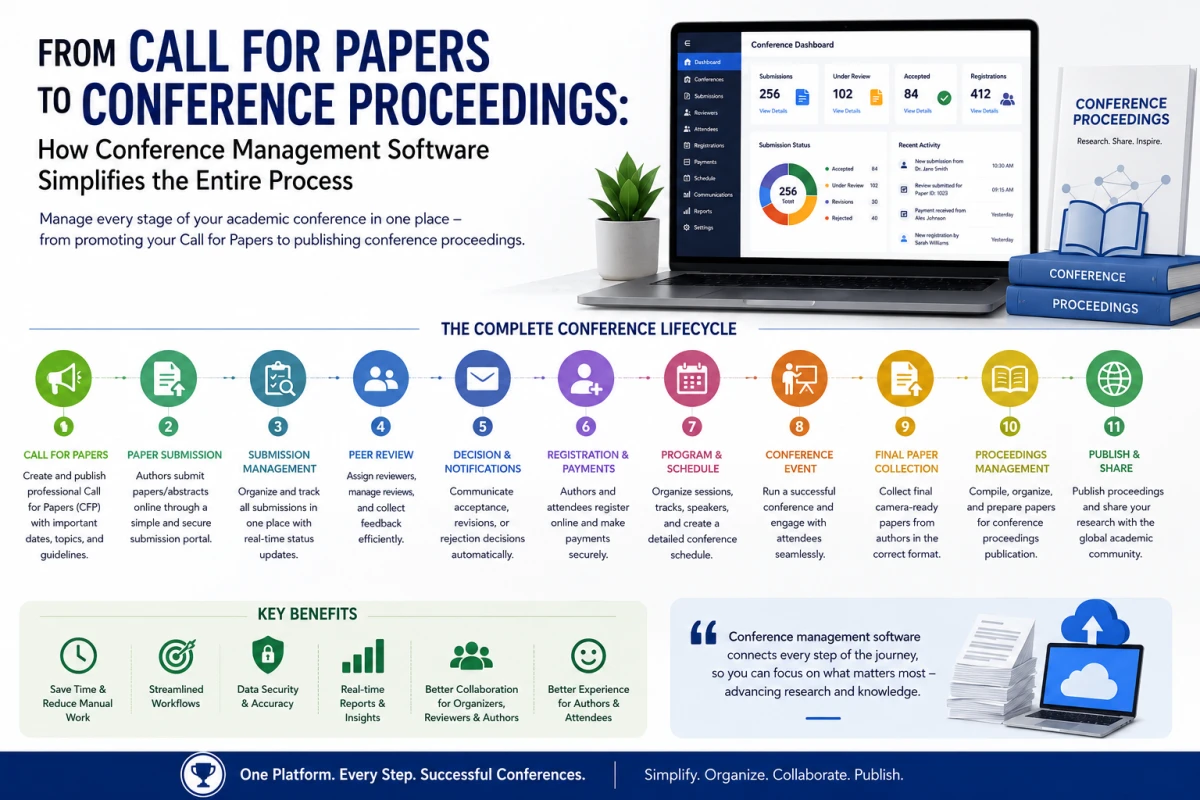
6. Set Up Online Research Paper Submission
Instead of collecting research papers through individual email messages, use an organized online submission workflow.
Depending on the conference requirements, authors may be asked to provide:
- Paper title
- Abstract
- Research paper
- Author information
- Institution or organization
- Email address
- Research category
An online submission system can make it easier for organizers to collect and organize research papers and author information.
7. Select and Assign Reviewers
If the conference uses peer review, create a reviewer committee with appropriate subject expertise.
Reviewers can then be assigned research papers according to the conference's review process and subject areas.
A structured peer-review workflow can help organizers track assigned submissions, reviewer feedback, recommendations, and decisions.
8. Manage the Peer Review Process
Establish clear review criteria before sending papers to reviewers. Reviewers should understand what they are expected to evaluate.
Depending on the conference, review criteria may include:
- Research relevance
- Originality
- Methodology
- Research quality
- Clarity
- Technical contribution
Once reviews are completed, the organizing or program committee can evaluate the feedback and make acceptance or rejection decisions according to the conference policy.
9. Invite Keynote Speakers and Presenters
Keynote speakers and invited researchers can add significant value to an academic conference.
Contact potential speakers early and provide them with information about the conference theme, expected audience, presentation format, date, time, and technical requirements.
10. Plan the Online Conference Program
Create a clear program that includes keynote presentations, research presentations, panel discussions, workshops, poster sessions, and breaks where appropriate.
A well-structured scientific program normally requires preparation, recruitment, agenda development, program checking, final review, and adjustments during the event. :contentReference[oaicite:4]{index=4}
Avoid making online sessions unnecessarily long. Provide enough time for presentations, questions, discussion, and technical transitions.
11. Choose the Right Online Conference Technology
Select technology based on the size and requirements of your conference rather than choosing tools simply because they are popular.
You may need tools for:
- Live video presentations
- Webinars or online sessions
- Screen sharing
- Participant questions
- Chat
- Polls
- Networking
- Recording
- Technical support
Research-based guidance on virtual scientific events recommends selecting tools appropriate to the event and audience and considering usability, accessibility, and the different components of the conference. :contentReference[oaicite:5]{index=5}
12. Test the Technology Before the Conference
Do not wait until the conference day to test your online setup.
Organize a technical rehearsal with speakers, session chairs, moderators, and technical staff.
Test:
- Microphones
- Cameras
- Screen sharing
- Presentations
- Internet connections
- Recording
- Participant access
- Backup presentation files
Online conference guidance also recommends joining sessions before they start and ensuring presenters have their presentation materials available, including backup copies where possible. :contentReference[oaicite:6]{index=6}
13. Open Conference Registration
Create a simple registration process for researchers, speakers, students, and other participants.
Registration information may include:
- Participant name
- Email address
- Institution
- Participant type
- Registration category
- Payment information, if applicable
Clearly explain registration deadlines, fees, cancellation policies, and participation instructions.
14. Promote the Research Conference
A well-planned conference still needs effective promotion to attract researchers and participants.
Promote the event through relevant academic networks, university departments, research societies, email campaigns, professional networks, and social media channels where appropriate.
Your promotional message should clearly communicate the conference topic, important dates, submission deadline, speakers, participation format, and registration information.
15. Run the Online Conference
On conference day, assign specific responsibilities to the technical team, moderators, session chairs, and conference organizers.
A typical online session can follow this structure:
- Open the session.
- Welcome participants.
- Introduce the speaker.
- Start the presentation.
- Manage questions and discussion.
- Close the session.
- Move participants to the next session.
Having dedicated technical support can help resolve microphone, presentation, access, and connectivity problems during live sessions.
16. Collect Feedback After the Conference
After the event, ask participants, speakers, reviewers, and organizers for feedback.
Useful questions can cover:
- Quality of presentations
- Ease of registration
- Online platform experience
- Conference schedule
- Technical experience
- Research sessions
- Suggestions for future conferences
17. Manage Conference Proceedings and Post-Conference Activities
After the conference, organizers may need to collect final papers, prepare proceedings, manage publication workflows, or archive conference materials.
If proceedings or research papers are published, organizers should follow the relevant publication requirements and clearly communicate publication details to authors.
Post-conference work can also include certificates, thank-you messages, recordings, reports, and future conference announcements.
Online Research Conference Checklist
Use the following checklist when planning your next online research conference:
- Define the conference theme.
- Set conference objectives.
- Create an organizing committee.
- Assign responsibilities.
- Choose the conference date.
- Select the online or hybrid format.
- Create the conference website or event page.
- Prepare the Call for Papers.
- Set up paper submission.
- Recruit reviewers.
- Manage peer review.
- Invite keynote speakers.
- Create the conference program.
- Choose online conference technology.
- Conduct technical rehearsals.
- Open participant registration.
- Promote the conference.
- Run the online sessions.
- Collect participant feedback.
- Manage proceedings and post-conference activities.
How ScholarMeet Can Help Organize a Research Conference
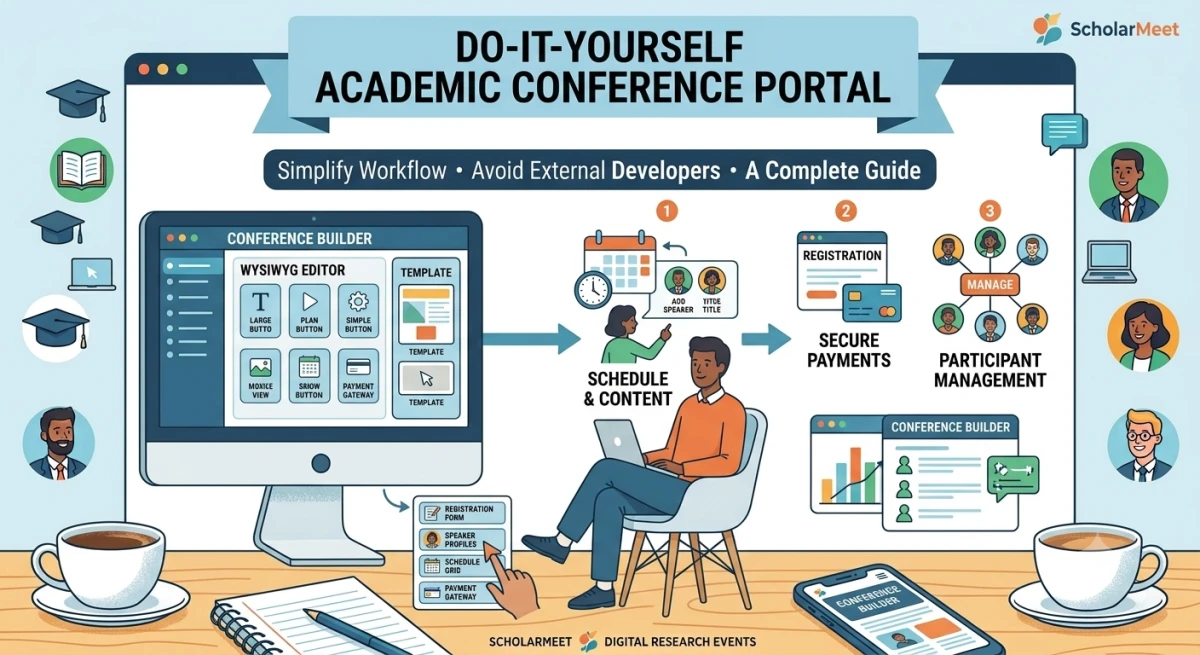
ScholarMeet is an academic conference discovery and management platform designed to help conference organizers create and manage conference listings while helping researchers discover relevant academic events.
Depending on the conference configuration, organizers can provide conference information, enable research paper submissions, manage conference-related activities, and provide registration information to participants.
Researchers can use ScholarMeet to discover academic conferences based on categories, locations, research areas, and other available conference information.
Learn more about ScholarMeet and explore how an online conference platform can support your academic event.
Tips for Organizing a Successful Online Research Conference
- Keep the online experience simple: Choose tools that participants can understand and access easily.
- Plan for different time zones: Consider your international audience when preparing the schedule.
- Test everything in advance: Conduct technical rehearsals with speakers and moderators.
- Keep sessions focused: Avoid overly long online sessions and allow time for questions.
- Have technical support: Assign someone to handle technical issues during live sessions.
- Communicate clearly: Send participants clear instructions before the conference.
- Collect feedback: Use participant feedback to improve future events.
Practical guidance from previous virtual scientific conferences also emphasizes careful scheduling, suitable technology, clear roles, and preparation for technical issues. :contentReference[oaicite:7]{index=7}
Frequently Asked Questions
How do I organize a research conference online?
Start by defining the conference theme and objectives, creating an organizing committee, selecting the date and format, setting up a conference page, collecting research papers, managing peer review, arranging speakers, opening registration, selecting online technology, and planning the live event.
Can universities organize research conferences online?
Yes. Universities can organize fully online or hybrid research conferences. An online format can allow researchers, students, speakers, and participants from different locations to participate remotely.
How can I collect research papers for an online conference?
Organizers can use an online conference management system with a paper submission workflow. Authors can submit their papers or abstracts and provide the required author and research information.
How does peer review work for an online conference?
Organizers can assign submitted papers to suitable reviewers, collect reviewer feedback, and use the review results to support conference decisions. The exact review process depends on the conference's policies.
What technology is needed for an online research conference?
An online conference may require video conferencing or webinar software, presentation tools, registration and communication tools, paper submission workflows, and technical support. The exact technology depends on the size and format of the event.
How can I promote an online research conference?
Universities and research societies can promote conferences through academic networks, university departments, research communities, email communication, professional networks, social media, and conference discovery platforms.
What should happen after an online research conference?
After the event, organizers can collect feedback, issue certificates where applicable, communicate with participants, prepare proceedings or publications where applicable, archive conference materials, and review the event for future improvements.
Conclusion
Organizing a research conference online requires more than selecting a video conferencing tool. Universities and research societies need to plan the academic program, organize the submission and review process, communicate with researchers, manage registration, support speakers, and prepare the online event experience.
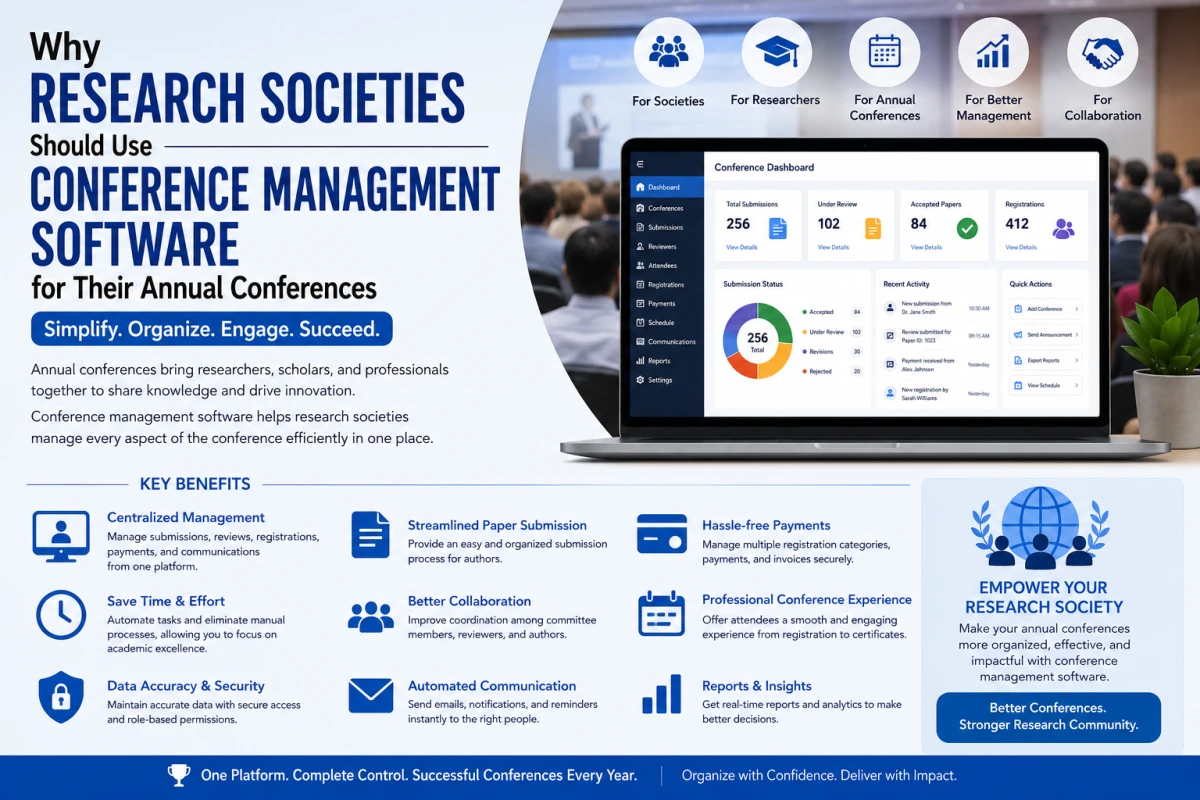
A structured conference management workflow can make these activities easier to coordinate. With clear planning, appropriate technology, and a dedicated organizing team, universities and research societies can create professional online research conferences for local and international participants.
ScholarMeet helps bring academic conference discovery and conference management together online, giving organizers a platform to publish conference information and helping researchers discover relevant academic events.
Explore ScholarMeet to learn more about online academic conference management.
For more information, contact hello@scholarmeet.com or WhatsApp +91 82003 85143 .