
The Complete Guide to Managing Academic Conferences with Conference Management Software
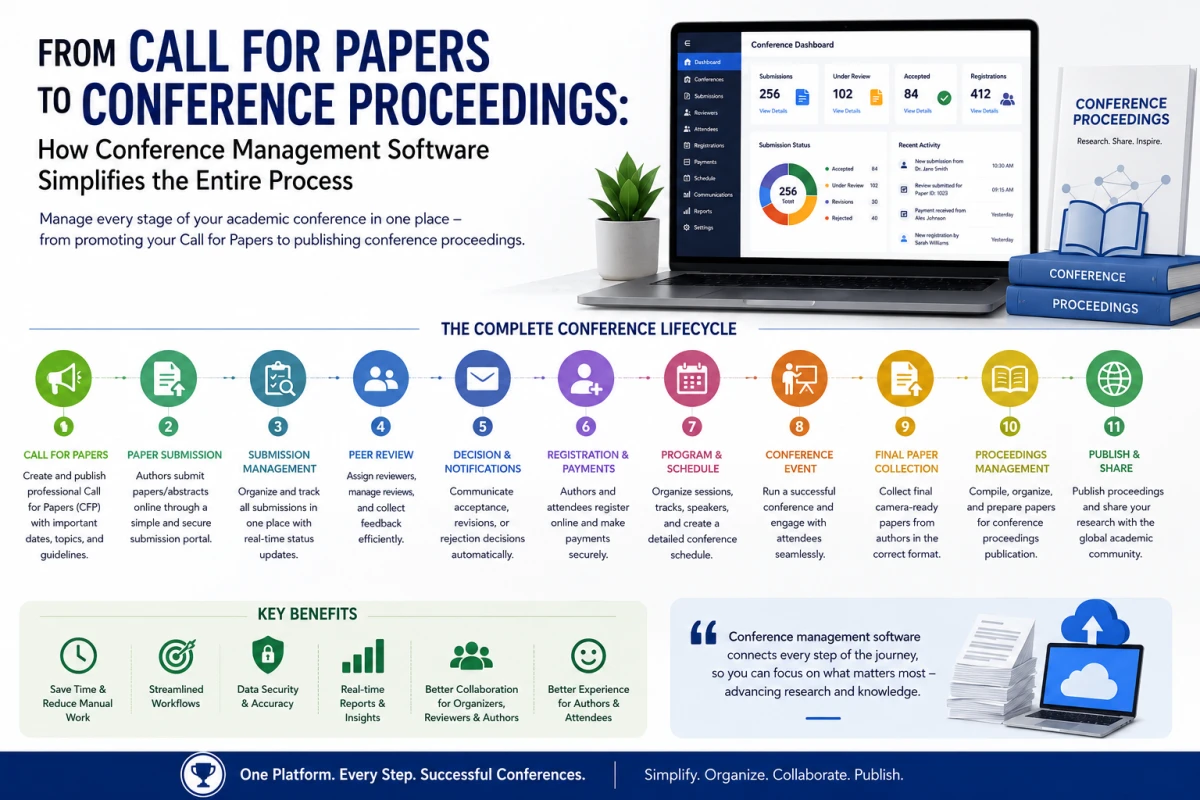
Managing an academic conference involves much more than creating an event website. Organizers need to coordinate registrations, paper submissions, participants, payments, communication, schedules, and many other activities.
As the number of participants and research submissions grows, managing these activities manually can become time-consuming and difficult. Conference management software provides a centralized solution for organizing and managing these processes more efficiently.
What Is Conference Management Software?
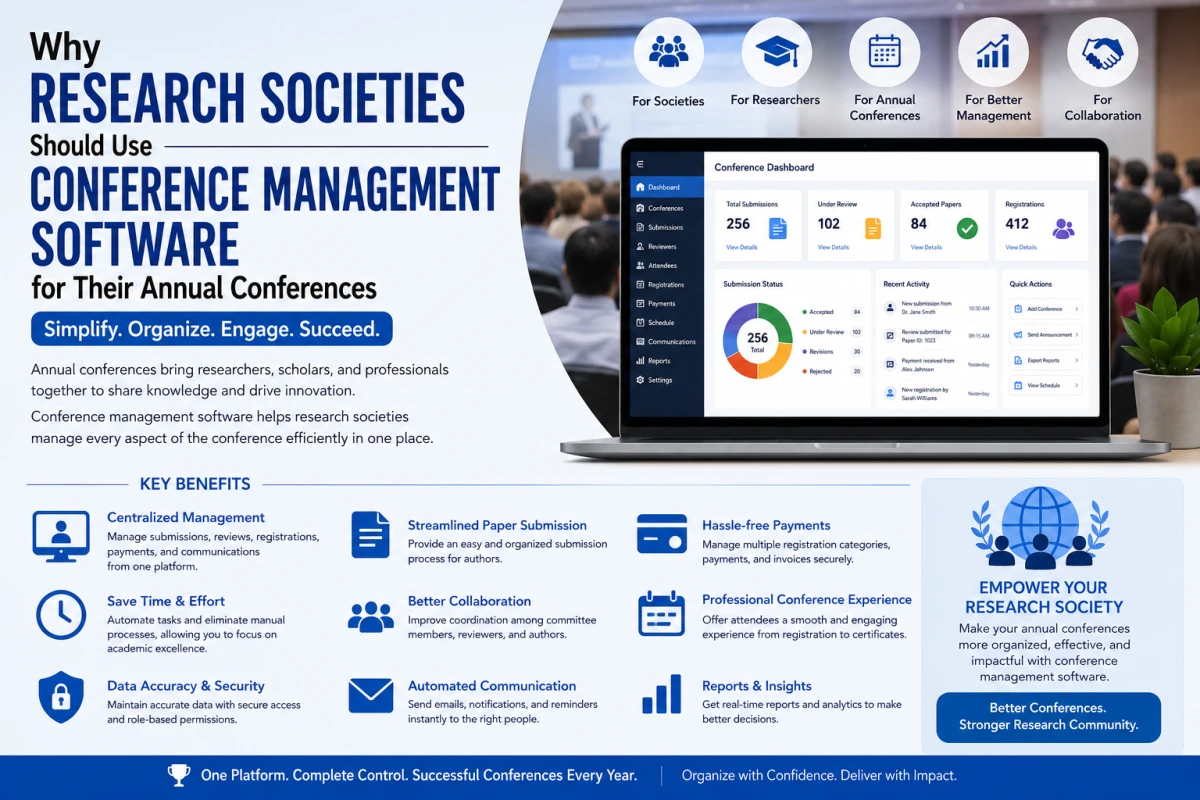
Conference management software is a digital platform designed to help universities, research institutions, professional organizations, and event organizers manage academic conferences from a centralized system.
Depending on the platform, it can support conference registration, paper and abstract submission, participant management, payment processing, email communication, event information, and reporting.
Why Do Academic Conferences Need Management Software?
Academic conferences involve multiple groups, including organizers, authors, reviewers, speakers, attendees, and sponsors. Managing information for all these groups using spreadsheets, email, and separate applications can create unnecessary administrative work.
Conference management software helps bring these activities together and gives organizers better control over the entire conference workflow.
1. Plan Your Academic Conference
The first step is to define the objectives and basic details of the conference. Organizers should establish the conference theme, dates, venue, format, target audience, important deadlines, registration categories, and submission requirements.
A centralized conference platform can help keep important event information organized and accessible throughout the planning process.
2. Create and Publish the Conference
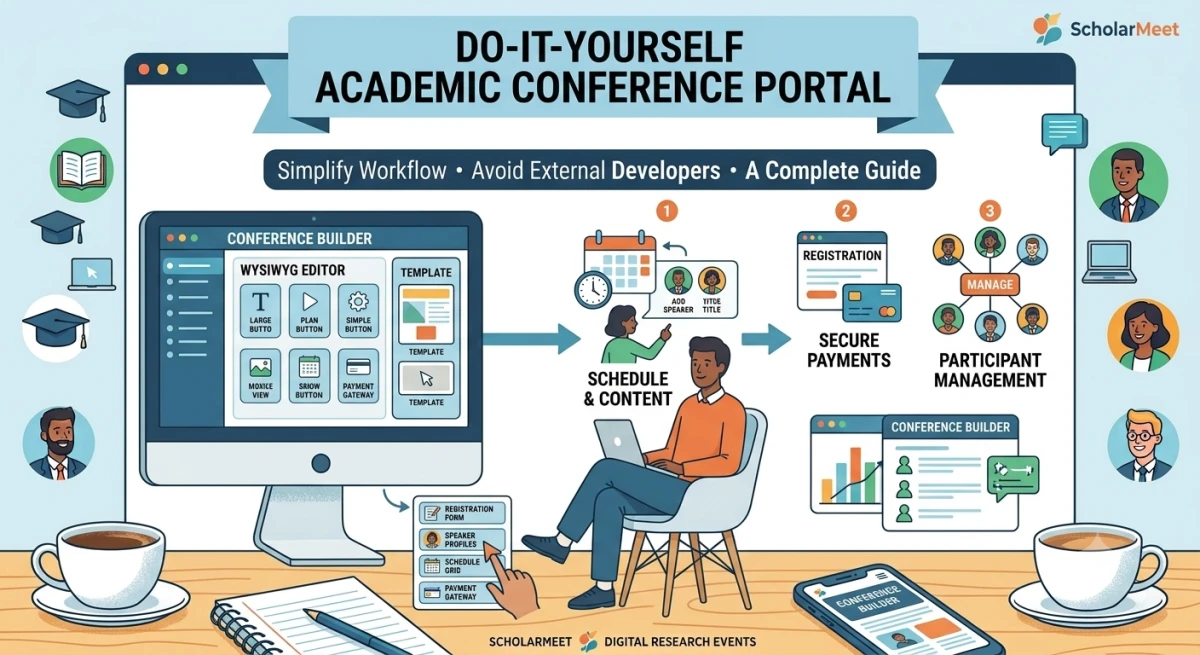
Once the basic details are finalized, organizers can create the conference page with information such as the title, description, dates, venue, speakers, important deadlines, registration details, and submission guidelines.
A well-structured conference page also makes it easier for researchers and participants to discover the event and access important information.
3. Manage Conference Registration
Registration is one of the most important parts of conference management. Organizers need to collect participant information and track registration status efficiently.
Conference management software can provide online registration forms and support different registration categories such as students, researchers, faculty members, presenters, and other participants.
4. Manage Paper and Abstract Submissions
Academic conferences often receive a large number of research papers and abstracts. Managing submissions through email can make it difficult to track authors, files, submission status, and deadlines.
A dedicated paper submission system provides a structured workflow for collecting and managing research submissions.
5. Organize the Review Process
Many academic conferences require submitted papers or abstracts to go through an academic review process. Conference management software can help organizers coordinate submissions and reviewers more efficiently.
A structured review workflow can make it easier to track submissions and communicate decisions to authors.
6. Manage Participants and Attendees
Participant management becomes increasingly important as conference registrations grow. Organizers need accurate records of attendees, authors, speakers, and other participants.
A centralized system can help organizers maintain participant information and quickly access registration records when required.
7. Manage Conference Payments
Conferences may have multiple registration fees depending on participant categories, deadlines, or event packages.
Integrating payment processing with registration can make it easier to track payment status and reduce manual reconciliation work.
8. Automate Conference Communication
Communication is essential throughout the conference lifecycle. Organizers may need to send registration confirmations, submission notifications, payment confirmations, reminders, and important event announcements.
Automated email notifications can reduce repetitive work and help ensure that participants receive relevant information on time.
9. Manage Important Conference Deadlines
Academic conferences usually have several important deadlines, including abstract submission, paper submission, registration, payment, and final submission deadlines.
Keeping these deadlines clearly organized helps authors and participants understand what actions they need to complete and when.
10. Manage the Conference Schedule
Once papers, speakers, and sessions are finalized, organizers need to create a clear conference schedule.
The schedule may include keynote sessions, technical sessions, paper presentations, workshops, networking activities, and other events.
11. Improve the Attendee Experience
A successful academic conference should provide a simple and convenient experience for participants. Easy registration, clear event information, timely notifications, and accessible schedules can improve participant satisfaction.
Conference management software can help organizers provide a more organized digital experience before, during, and after the event.
12. Track Conference Data and Reports
Organizers may need reports on registrations, participants, submissions, payments, and other conference activities.
Centralized conference data can make reporting easier and help organizers evaluate the success of an event.
Benefits of Conference Management Software
- Centralized conference management
- Online conference registration
- Paper and abstract submission management
- Participant and attendee management
- Payment and registration tracking
- Automated email communication
- Better management of conference deadlines
- Organized conference schedules
- Reduced manual administrative work
- Improved reporting and conference data management
Who Can Benefit from Conference Management Software?
Conference management software can be useful for universities, colleges, research institutions, academic societies, professional associations, conference organizers, and organizations that regularly conduct academic events.
It is especially valuable for organizations managing conferences with large numbers of participants, multiple paper submissions, registration categories, reviewers, and payment requirements.
How to Choose the Right Conference Management Software
Before selecting a platform, organizers should consider the features and workflows required for their specific conference.
- Conference registration capabilities
- Paper and abstract submission
- Participant management
- Payment integration
- Email notifications
- Review and submission workflows
- Conference schedule management
- Reports and analytics
- Ease of use for organizers and participants
- Scalability for future conferences
Conclusion
Managing an academic conference requires coordination across many different activities. From planning and registration to paper submission, participant management, payments, communication, and reporting, each stage needs to be handled efficiently.
Conference management software can bring these processes together in one centralized platform, helping universities, research institutions, and conference organizers reduce administrative work and manage academic events more effectively.
By choosing the right conference management solution, organizations can create a more organized workflow for conference teams while providing a better experience for researchers, authors, and participants.